-
Third Sunday of Easter

The Adoration of the Lamb, from The Apocalypse by Albrecht Dürer — woodcut, 17 3/8 x 12 inches, 1498 May 1, 2022 Lectionary Texts — Year C
Acts 9:1-6 (7-20)
Psalm 30
Revelation 5:11-14
John 21:1-19
View LectionaryThis week, I bring you another image rising out of the rich imagery of John’s Book of Revelation. My church fellowship has expressed an interest in exploring how artists have given vision to such texts. Since the Lectionary is including selections from Revelation, I am choosing to explore various engraving prints during the Easter season.
With the advent of the printing press, many artists took on illustration work in wood and metal engraving. The German Renaissance master, Albrecht Dürer, seized the opportunity to make his work available to the masses through the first ever published and copyrighted book of artwork. The Apocalypse consisted of 15 woodcut images depicting scenes from the text of Revelation. You will find prints from this volume at most major museums and many smaller university museums because of the many surviving copies of the book.
What you will not find is much explanation into the scenes Dürer has rendered. You, the viewer, are left to contemplate, explore and meditate as your soul searches and the Spirit nudges. At the top we see the victorious multi-horned, multi-eyed lamb holding the cross banner surrounded by the four living creatures. Blood flows from the lamb’s chest into a chalice held by one of the elders. John appears standing at the base of the image on Patmos while the heavenly scene enclosed in a ring of clouds has opened before him. An elder wearing a crown speaks with John (Rev. 7:13) and at the center we see the crowd of white-robed saints waving palms (Rev 7:9).Practicing Visio Divina:
- View the artwork
What do you see?
Note shapes – color – style – movement
What stands out for you?
What are you curious about?
What questions do you have?
Hold back any feelings – judgments – opinions - Read the accompanying scripture and look over the artwork again
What connections do you make?
Between the image and text?
What is coming to mind from your own experience?
What feelings are rising in you?
Are you uncomfortable with something?
There are no right or wrong answers - Read the scripture again and explore the artwork a third time
What do you hear?
What is God saying to you?
What do you wish to speak to God?
What blessing or prayer is rising in you?
I’m no good to You dead! What benefits come from my rotting corpse? My body in the grave will not praise You. No songs will rise up from the dust of my bones. From dust comes no proclamation of Your faithfulness. Hear me, Eternal Lord—please help me, Eternal One—be merciful!
You did it: You turned my deepest pains into joyful dancing; You stripped off my dark clothing and covered me with joyful light. You have restored my honor. My heart is ready to explode, erupt in new songs! It’s impossible to keep quiet! Eternal One, my God, my Life-Giver, I will thank You forever. — Psalm 30:9-12 - View the artwork
-
Second Sunday of Easter
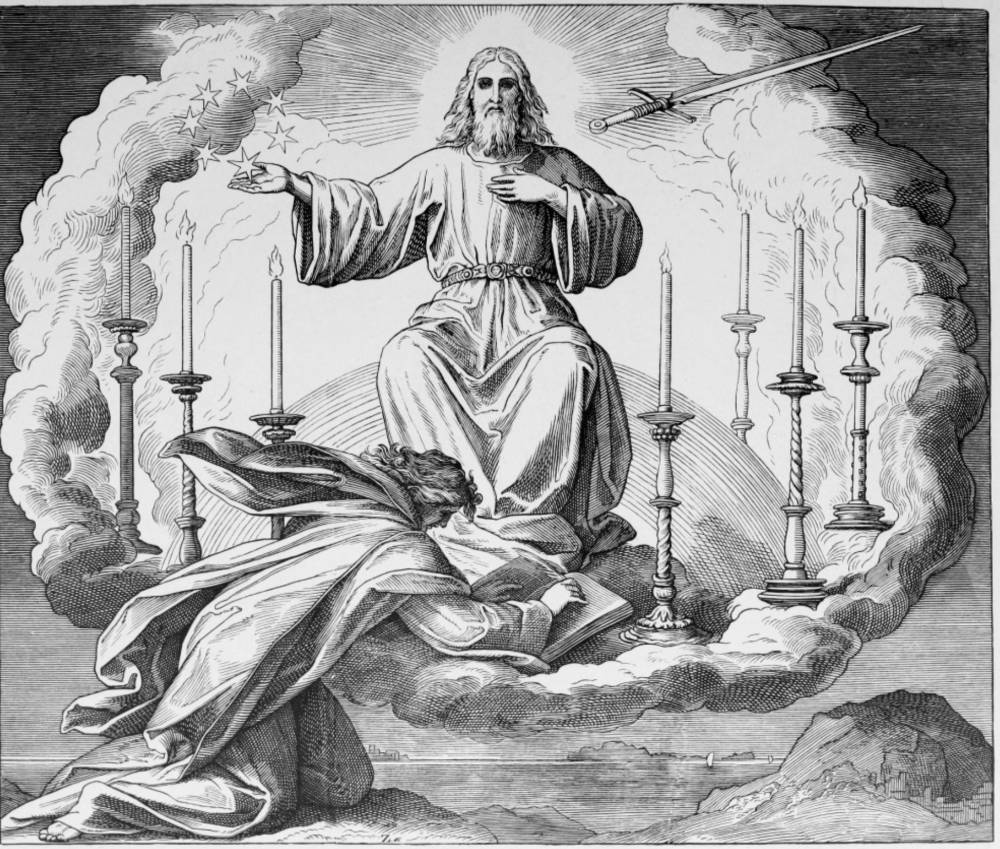
Jesus Christ reveals himself to John by Julius Schnorr von Carolsfeld — Die Bibel in Bildern (1852), Plate 236. Likely engraved by Z. Scheckel, inscribed left middle. April 24, 2022 Lectionary Texts — Year C
Acts 5:27-32
Psalm 118:14-29 or Psalm 150
Revelation 1:4-8
John 20:19-31
View Lectionary“Faith may, will, and must have its images!” – Martin Luther
I had an amazing experience in a small art gallery in Sarajevo, Bosnia many years ago. I was most interested in purchasing some etchings at the gallery. This apparently impressed owner as most clients gravitate towards larger paintings to fill up wall space in their home or apartment. Etchings, often much smaller, are meticulous and time consuming to create, but they can contain wonderful detail. After viewing and selecting two etchings to purchase, the man said he had something special to show me. He went to his storage room and emerged with a very old, very large book – no doubt an original edition. It was a volume of what is known as Raphael’s Bible — etchings made from the Vatican ceiling fresco designs of Renaissance artist, Raphael. I remember carefully turning the pages with trembling hands and looking over each page in awe. That rare opportunity was the start of my interest in illustrated Bibles (something I wish we would see a revival of today).
Our image this week comes from the Picture Bible of Julius Schnorr von Carolsfeld and was featured at the opening of the Book of Revelation. This German Luther Bible was published from 1852-1860 and an English edition became available in 1861. Schnorr von Carolsfeld was part of a revival group of artists who emulated the work of Renaissance masters. Schnorr von Carolsfeld’s Picture Bible aimed to replace text with image rather than simply provide illustrations. These etchings were compared to and critiqued against Raphael’s Bible, long considered the standard of excellence.
Practicing Visio Divina:
- View the artwork
What do you see?
Note shapes – color – style – movement
What stands out for you?
What are you curious about?
What questions do you have?
Hold back any feelings – judgments – opinions - Read the accompanying scripture and look over the artwork again
What connections do you make?
Between the image and text?
What is coming to mind from your own experience?
What feelings are rising in you?
Are you uncomfortable with something?
There are no right or wrong answers - Read the scripture again and explore the artwork a third time
What do you hear?
What is God saying to you?
What do you wish to speak to God?
What blessing or prayer is rising in you?
I am the Alpha and the Omega, [the very beginning and the very end,] the One who is, the One who was, and the One who is coming: the All Powerful. — Revelation 1:8
- View the artwork
-
Easter Sunday — Resurrection of the Lord
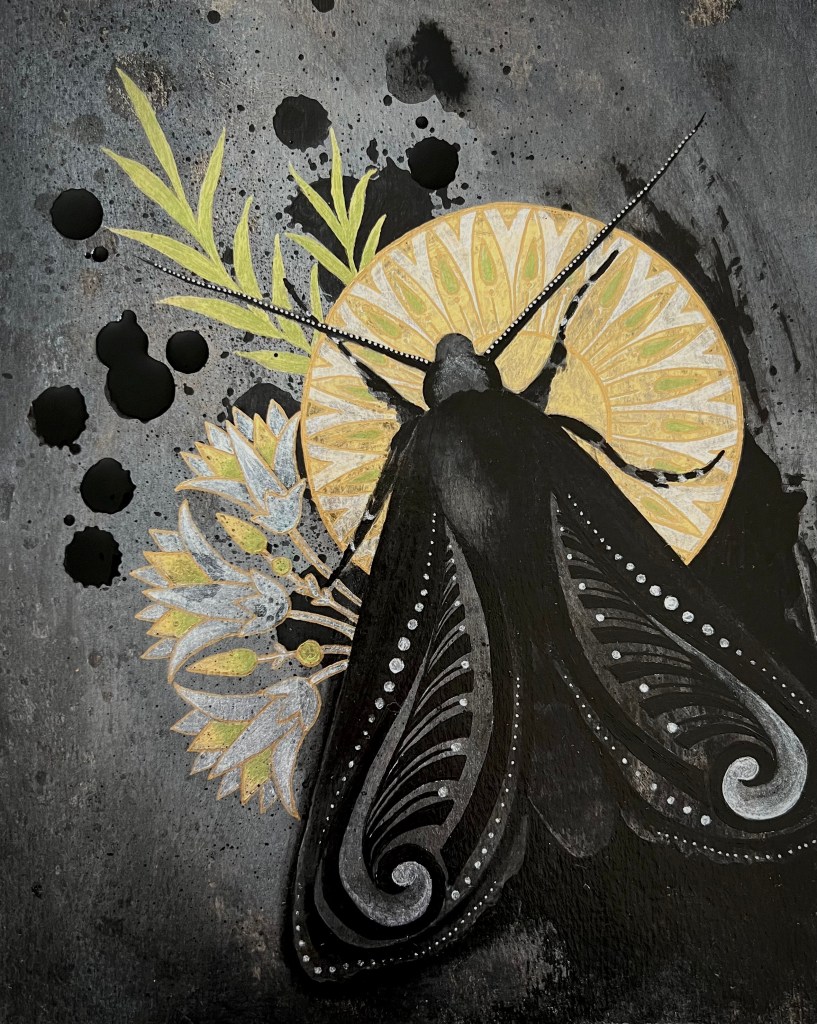
Resurrection: A Lectionary Journey by Michelle L Hofer – acrylic on paper, 8 x 10 inches, 2022 April 17, 2022 Lectionary Texts — Year C
Isaiah 65:17-25
Psalm 118:1-2, 14-24
I Corinthians 15:19-26 or Acts 10:34-43
John 20:1-18 or Luke 24:1-12
View LectionaryIt feels a bit special to me to be posting my first Visio Divina celebrating Easter. As I have been sitting with the texts for today and thinking about this whole Visio Divina adventure/commitment, I find myself thinking many wide ranging thoughts about seeing, vision and the sense of sight.
John gives us the tender account of Mary Magdalene’s experience at the tomb. In her grief and distress, she doesn’t recognize Jesus until he calls her by name. At that moment, she sees.
Our eyes, the sense of sight, are such extraordinary gifts. John O’Donahue writes with such beauty and wisdom in Anam Cara about vision. I wanted to share a few of his insights on the connection between seeing and love. These are thoughts I find appropriate for Easter — a day when the Light of the World opens to us new ways of seeing.
To the loving eye, everything is real.
Love is the light in which we see light. Love is the light in which we see each thing in this true origin, nature, and destiny. If we could look at the world in a loving way, then the world would rise up before us full of invitation, possibility, and depth.
The loving eye can even coax pain, hurt, and violence toward transfiguration and renewal…It rises above the pathetic arithmetic of blame and judgment and engages experience at the level of its origin, structure and destiny. The loving eye sees through and beyond image and effects the deepest change.
Vision is central to your presence and creativity. To recognize how you see things can bring you self-knowledge and enable you to glimpse the wonderful treasures your life secretly holds. — John O’DonohuePracticing Visio Divina:
- View the artwork
What do you see?
Note shapes – color – style – movement
What stands out for you?
What are you curious about?
What questions do you have?
Hold back any feelings – judgments – opinions - Read the accompanying scripture and look over the artwork again
What connections do you make?
Between the image and text?
What is coming to mind from your own experience?
What feelings are rising in you?
Are you uncomfortable with something?
There are no right or wrong answers - Read the scripture again and explore the artwork a third time
What do you hear?
What is God saying to you?
What do you wish to speak to God?
What blessing or prayer is rising in you?
Eternal One: Now look here! I am creating new heavens and a new earth. The weary and painful past will be as if it never happened. No one will talk or even think about it anymore. So take joy and celebrate with unending gladness on account of what I am creating. Look carefully! I am making this place I’ve chosen, this Jerusalem, a city of joy. I’m making her citizens, My people, a people of gladness. This Jerusalem, My pride and joy, and her people will be a delight to Me. Though you listen at every corner, You will never hear crying, never hear despair or grief. — Isaiah 65:17-19
Artist Statement — Resurrection: A Lectionary Journey:
I do not remember which came to me first — an early morning vision of a great dark moth adorned in shimmery dots or my learning the moth was a symbol of resurrection among early Celtic Christians. Regardless, I let the curiosity of exploring moth as symbol guide my artistic and spiritual seeking in this Lenten season.
The moth, just as butterfly, undergoes a death and resurrection. Unlike the sun-seeking butterfly, the moth emerges in the light of moon. As a metaphor for Christ, a man of sorrows, acquainted with grief,* the moth’s association with night allows space for exploring discomfort, suffering and death. In contemplating this creature of night, there is invitation to converse with darkness and befriend mystery. And still the moth’s metamorphosis is reason to marvel.
A collection of design elements and motifs rising from ancient Egyptian inspiration bring the Triune God to life. While Christ appears as moth, Spirit is present in a golden halo form and Divine Parent through the creation elements of bud, blossom and palm. Without this Divine fullness of presence and action, resurrection is only a dream. But this is no fantasy. This is the fullness of Divine hope in the darkness. Here is the fullness of Divine hope amidst all my discomfort and sorrow.
Here too is the portrait of a creature undeterred by the fading light, the fading of laughter and smiles… the One accustomed to doubt’s cold kiss and betrayal’s nocturnal whispers… the One who speaks my name even when I am weeping at dawn in the garden… the One I have found.*Isaiah 53:3
acrylic painting, Acts, art process, change, Christian art, Christian symbolism, crucifixion, death, Divine Parent, dream art, easter sunday, Holy Spirit, I Corinthians, Isaiah, Jesus Christ, John, John O'Donohue, journey, Lectionary, lent art, lenten art, love, Luke, Mary Magdalene, Michelle L Hofer, moth, moth art, new life, Psalms, resurrection, seeing, sight, suffering, transformation, vision, Year C - View the artwork
-
Good Friday
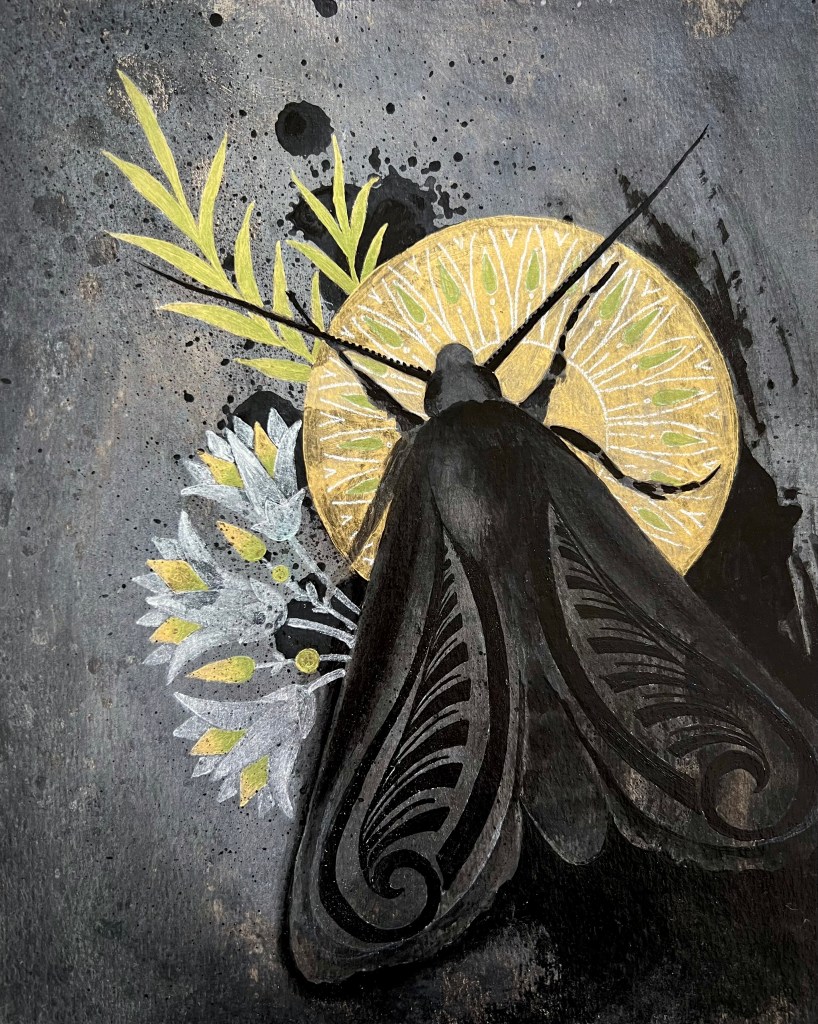
Resurrection: A Lectionary Journey by Michelle L Hofer – acrylic on paper, 8 x 10 inches, 2022 April 15, 2022 Lectionary Texts — Year C
Isaiah 52:13 – 53:12
Psalm 22
Hebrews 10:16-25
John 18:1 – 19:42
View LectionaryIt is Good Friday. As stone is rolled over the mouth of the tomb, we stand at the door flung wide open to mystery.
The moth has received shadow details and a wing pattern in black. I do not wish to expound on the inspiration behind this progress. I shall reserve that for when the piece is completed. For now, see what comes on your own. Follow the visio divina guide as you explore and study:
- View the artwork
What do you see?
Note shapes – color – style – movement
What stands out for you?
What are you curious about?
What questions do you have?
Hold back any feelings – judgments – opinions - Read the accompanying scripture and look over the artwork again
What connections do you make?
Between the image and text?
What is coming to mind from your own experience?
What feelings are rising in you?
Are you uncomfortable with something?
There are no right or wrong answers - Read the scripture again and explore the artwork a third time
What do you hear?
What is God saying to you?
What do you wish to speak to God?
What blessing or prayer is rising in you?
It is hard to understand why God would crush His innocent Servant. But it is in His suffering for sin that God deals decisively with sin and its harmful effects. Yet the Eternal One planned to crush him all along, to bring him to grief, this innocent servant of God. When he puts his life in sin’s dark place, in the pit of wrongdoing, this servant of God will see his children and have his days prolonged. For in His servant’s hand, the Eternal’s deepest desire will come to pass and flourish. As a result of the trials and troubles that wrack his soul, God’s servant will see light and be content Because He knows, really understands, what it’s about; as God says, “My just servant will justify countless others by taking on their punishment and bearing it away. Because he exposed his very self— laid bare his soul to the vicious grasping of death— And was counted among the worst, I will count him among the best. I will allot this one, My servant, a share in all that is of any value, Because he took on himself the sin of many and acted on behalf of those who broke My law.” — Isaiah 53:10-12
- View the artwork
-
Palm Sunday
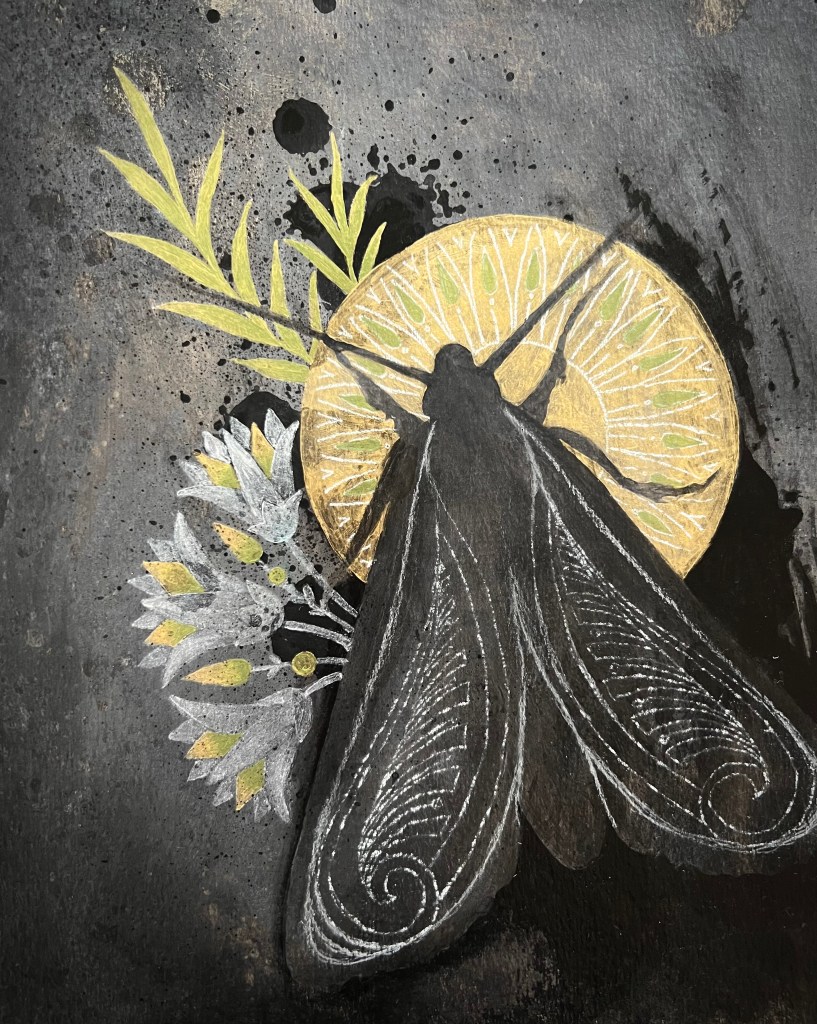
Resurrection: A Lectionary Journey by Michelle L Hofer – acrylic on paper, 8 x 10 inches, 2022 April 10, 2022 Lectionary Texts — Year C
Psalm 118:1-2, 19-29
Luke 19:28-40
View LectionaryIt was a fairly easy artistic task this week to add a spray of blushing green palm leaves to this composition. I enjoyed the simplicity of laying down several coats of gold followed by a top layer of pale olive green metallic. It was nice and I’m pleased with the result.
Palm Sunday is a really nice celebration. It’s joyful and upbeat. There’s no need to hold back one’s enthusiasm. Palm Sunday at it’s core, and the reason it has long been celebrated by Christians the world over, is an opportunity to welcome Christ and celebrate his work and worth. But it is also known as a day to commit or recommit to following Christ. The welcoming part is easy, the following is where it gets a bit more complex.
This brought to mind Soren Kierkegaard thoughts on the subject of admirers versus followers…Does not the Way — Christ’s requirement to die to the world and deny self — does this not contain…danger? The admirer never makes any true sacrifices. He always plays it safe. Though in word he is inexhaustible about how highly he prizes Christ, he renounces nothing, will not reconstruct his life, and will not let his life express what it is he supposedly admires. Not so for the follower. No, no. The follower aspires with all his strength to be what he admires. — Soren Kierkegaard
What thoughts do you have?
What comes easy to your life of faith? What is challenging?
Who are you in the crowd as Jesus rides past?
Are you an admirer? Are you a follower?The Eternal is the True God; He shines His light on us. Let the feast begin. Bring the sacrifice, and tie it to the horns of the altar. You are my God, and I give You thanks; You are my God, and I praise You. Give thanks to our Eternal Lord; He is always good. He never ceases to be loving and kind. — Psalm 118:27-29
-
Fifth Sunday of Lent
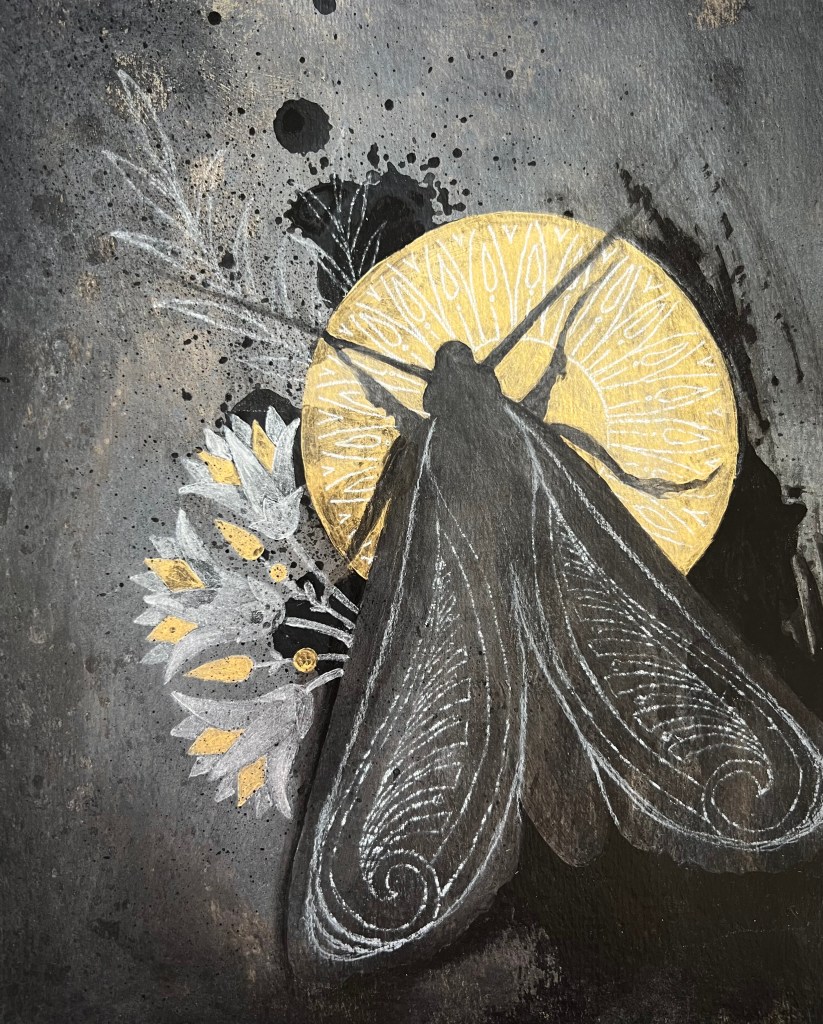
Resurrection: A Lectionary Journey by Michelle L Hofer – acrylic on paper, 8 x 10 inches, 2022 April 3, 2022 Lectionary Texts — Year C
Isaiah 43:16-21
Psalm 126
Philippians 3:4b-14
John 12:1-8
View LectionaryThe White Stripes have a simple song called Little Acorns that begins with this monologue read by Mort Crim. It came to mind this week.
When problems overwhelm us and sadness smothers us, where do we find the will and the courage to continue?
Well, the answer may come in the caring voice of a friend, a chance encounter with a book or from a personal faith.
For Janet, help came from her faith but it also came from a squirrel.
Shortly after her divorce Janet lost her father. Then she lost her job, she had mounting money problems. But Janet not only survived. She worked her way out of despondency and now she says life is good again.
How could this happen?
She told me that late one autumn day when she was at her lowest, she watched a squirrel storing up nuts for the winter. One at a time he would take them to the nest.
And she thought, “If that squirrel can take care of himself with the harsh winter coming on, so can I.
Once I broke my problems into small pieces, I was able to carry them, just like those acorns, one at a time.“As we first set off on the Lenten journey, it is very much a slow and steady progression, we move a step, a day, a week at a time. But now we have reached a point along the way where in stopping we can both see what is behind us and a bit more clearly what is ahead.
I have chosen this week to simply chalk out what is ahead on this art piece. There is celebration coming, but there is darkness waiting too. I like that the Lenten passages this Sunday are hopeful and anticipatory. But they are not without shadows of the difficulties that must be faced. Jesus talks of the day of his burial, Paul the share in Christ’s sufferings.
Consider the following questions as you ponder the art and Scriptures together…
From the Isaiah passage: What does it mean to no longer consider the things of old?
What assurance are we offered in the Psalm? How does this boost your hope?
What or who keeps you going? Do you find Paul’s words encouraging?
What qualities/characteristics of Mary’s act of anointing do you desire for yourself?It was as if we were dreaming — Our mouths were filled with laughter; our tongues were spilling over into song. The word went out across the prairies and deserts, across the hills, over the oceans wide, from nation to nation: “The Eternal has done remarkable things for them.” We shook our heads. All of us were stunned — the Eternal has done remarkable things for us. We were beyond happy, beyond joyful. And now, Eternal One, some are held captive and poor. Release them, and restore our fortunes as the dry riverbeds of the South spring to life when the rains come at last. Those who walk the fields to sow, casting their seed in tears, will one day tread those same long rows, amazed by what’s appeared. Those who weep as they walk and plant with sighs will return singing with joy, when they bring home the harvest. — Psalm 126:1-6
acrylic painting, anticipation, art process, challenges, change, Christ, Christian symbolism, difficulties, Fifth Sunday of Lent, hope, Isaiah, Jesus, John, journey, joy, laughter, Lectionary, lent art, little acorns, Mary, Michelle L Hofer, mort crim, moth, Paul, Phillippians, Psalms, resurrection, suffering, tears, transformation, white stripes, Year C -
Fourth Sunday of Lent
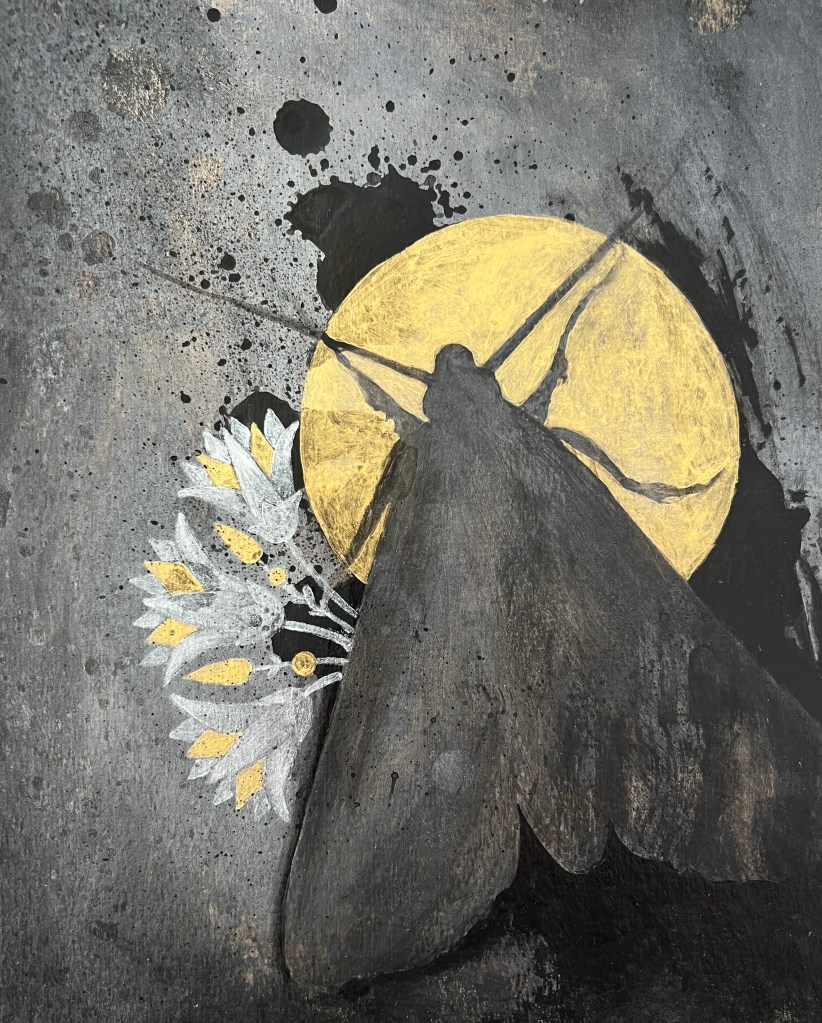
Resurrection: A Lectionary Journey by Michelle L Hofer – acrylic on paper, 8 x 10 inches, 2022 March 27, 2022 Lectionary Texts — Year C
Joshua 5:9-12
Psalm 32
2 Corinthians 5:16-21
Luke 15:1-3, 11b-32
View LectionaryMy first wool sweater which I purchased as an adult was a fun bright pink number. Not having grown up with wool, I had no idea how to care for or store it. I was quite disappointed to pull the sweater from my closet one day only to find a series of tiny holes had been chewed in the shoulder. Moths.
As I have been reflecting on the moth as metaphor, I found myself asking: How do moths chew?The answer is: They don’t. It is only in the caterpillar stage that these creatures consume. Once they transform into winged beings, they are only able to suck things like nectar or some species don’t eat or drink anything. There is a marked change in consumption – a fact that ties this week to the passage in Joshua as well as the story of the prodigal son.
Once the Israelites entered the land of Canaan, they stopped consuming manna. They were now able to feast on honey and the sweet nectar of the land’s abundant fruit and produce. In the case of the prodigal son, he went from being hungry and contemplating the food thrown to the pigs to dining on the fattened calf.
In the passage from 2 Corinthians, we also have imagery of transformation and change. Through Christ, we are new creations — a new life has begun. This allows the image of the moth to be a symbol for us also. We too have and/or will experience profound change in our faith walk.
As you reflect on the image this week and read the texts, think back on your own journey and experience…
Where have you experienced a change in who you are or who you understand yourself to be?
Can you think of a time when you felt a definite shift?
Have your consumption habits changed in any way? (this could be anything related to your eating, drinking, what you read or watch, the people you spend time with, the ways you practice self-care and soul-care)I will teach you and tell you the way to go and how to get there; I will give you good counsel, and I will watch over you. — Psalm 32:8
-
Third Sunday of Lent

Resurrection: A Lectionary Journey by Michelle L Hofer – acrylic on paper, 8 x 10 inches, 2022 March 20, 2022 Lectionary Texts — Year C
Isaiah 55:1-9
Psalm 63:1-8
I Corinthians 10:1-13
Luke 13:1-9
View LectionaryI’ve added a good amount of dark now to the background of this piece, but I did it after I had already added gold. I tried to work around the gold, but things got messy. At one point, I had black over much of the gold and it felt as though I was going backwards. The similarities of this experience with that of the spiritual journey were not lost on me as I worked. I make progress, and then I digress. I mess it up. My needs become great.
I like the story Jesus tells us this week about the fig tree that is no longer bearing fruit. The vineyard owner tells the gardener to cut it down, but the gardener argues to leave it one more season with some additional tending and fertilizing and see if a change happens.
Lent is the season for spiritual check-ups. It’s good to do a walk through like the vineyard owner in Jesus’ parable. It is good to observe and reflect on the state of our own being, our own heart. This is necessary work. I personally don’t feel like I’ve done Lent proper justice if I haven’t taken the Spirit’s hand and embarked on a tour within.
You may find it helpful to set aside a block of time to do a spiritual assessment using questions such as these:
Have I born fruit in the last year?
If so, what is that fruit?
If not, why not? What needs change, help or pruning?
What attitudes, beliefs, practices and habits are serving me and fostering growth? Which are not?
Where would I like to be on my spiritual journey next year at this time?A man has a fig tree planted in his vineyard. One day he comes out looking for fruit on it, but there are no figs. He says to the vineyard keeper, “Look at this tree. For three years, I’ve come hoping to find some fresh figs, but what do I find? Nothing. So just go ahead and cut it down. Why waste the space with a fruitless tree?”
The vineyard keeper replies, “Give it another chance, sir. Give me one more year working with it. I’ll cultivate the soil and heap on some manure to fertilize it. If it surprises us and bears fruit next year, that will be great, but if not, then we’ll cut it down.” — Luke 13:6-9 -
Second Sunday of Lent
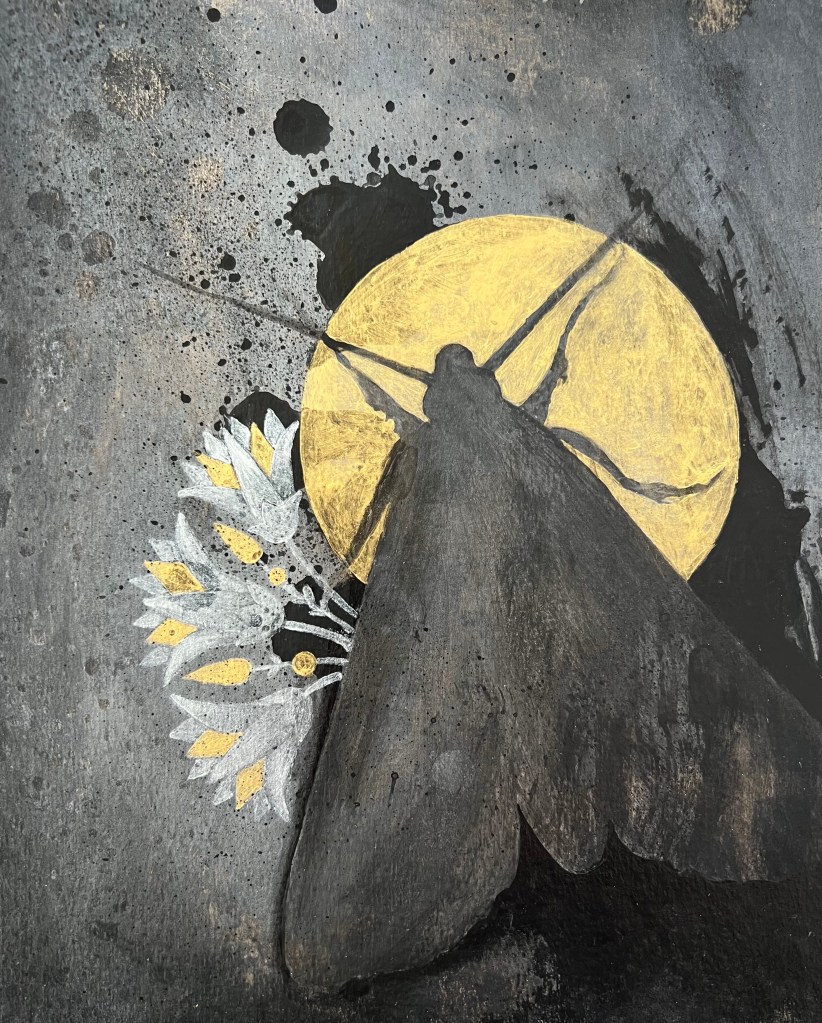
Resurrection: A Lectionary Journey by Michelle L Hofer – acrylic paint on paper, 8 x 10 inches, 2022 March 13, 2022 Lectionary Texts — Year C
Genesis 15:1-12,17-18
Psalm 27
Philippians 3:17-4:1
Luke 13:31-35
Luke 9:28-36, (37-43a)
View LectionaryAn interesting point came up in my house church group during the discussion of last week’s variation of this piece — moths are destroyers. This observation brought an interesting perspective to the conversation on using a moth as a symbol for Christ and resurrection. We don’t think of Christ as destroyer (this concept seems to fit better with depictions of God in the Old Testament Scriptures). Yet, we hold hope in a God who will ultimately destroy evil and vanquish death and we understand Christ’s essential role in this work.
As you read through the lectionary texts today, I would encourage you to note any words or phrases that relate to consuming, destroying, seizing, killing, etc.
What or who do these statements refer to?
How do they sit with you?
What feeling or feelings do they stir up?Right then some Pharisees came and warned Him.
Pharisees: You’d better get out of here because Herod is plotting Your murder.
Jesus: You can give that sly fox this message: “Watch as I cast out demons and perform healings today and tomorrow, and on the third day I’ll reach My destination. But for today and tomorrow and the next day, I have to continue My journey, for no prophet should perish outside of Jerusalem.”
O Jerusalem! O Jerusalem! You kill the prophets and you stone the messengers who are sent to you. How often I wanted to gather in your children as a hen gathers in her chicks under her wings, but you were not willing to come to Me. — Luke 13:31-34 -
First Sunday of Lent

Resurrection: A Lectionary Journey by Michelle L Hofer – acrylic on paper, 8 x 10 inches, 2022 March 6, 2022 Lectionary Texts — Year C
Deuteronomy 26:1-11
Psalm 91:1-2,9-16
Romans 10:8b-13
Luke 4:1-13
View LectionaryFor me personally, art making is as much about the process and the journey as it ever is about the finished work. I consider it very much a spiritual practice. I am featuring a progressive piece of art for the season of Lent here in Visio Divina. I did something similar a few years back and really enjoyed it.
In 2018, I started creating colorful abstract paintings and adding imagery to them (mostly variations on Christian icon art). This has been a life-giving creative process, and I will be utilizing it for this project.
Last month I had a powerful dream that I would like to create into a work of art — it was of a beautiful large black velvety-looking moth. The edges of the wings had delicate dot work. It was amazing. I’ve recently learned moths have long been considered a symbol of the resurrection, and I have a wonderful idea to focus on during Lent.
I began this painting on Ash Wednesday and for each Sunday I will be showing you a progression on it. It will be abstract-ish for a good part of the journey. Allow this to be an opportunity to explore how color and texture reflect and embody the feelings and emotions conveyed by our Lenten texts. Please ask any questions you may have and you are welcome to message me if it feels too vulnerable to ask in the comments here.
I’ll share this with you… I had glanced over these text this week and then had kind of forgotten them when I made the decision that I would paint the moth as a shadow this week. I went back and read the texts again and was surprised when I got to the Psalms. So cool.
Practicing Visio Divina:
- View the artwork
What do you see?
Note shapes – color – style – movement
What stands out for you?
What are you curious about?
What questions do you have?
Hold back any feelings – judgments – opinions - Read the accompanying scripture and look over the artwork again
What connections do you make?
Between the image and text?
What is coming to mind from your own experience?
What feelings are rising in you?
Are you uncomfortable with something?
There are no right or wrong answers - Read the scripture again and explore the artwork a third time
What do you hear?
What is God saying to you?
What do you wish to speak to God?
What blessing or prayer is rising in you?
He who takes refuge in the shelter of the Most High will be safe in the shadow of the Almighty. He will say to the Eternal, “My shelter, my mighty fortress, my God, I place all my trust in You.”
For you made the Eternal [your] refuge, the Most High your only home. — Psalm 91:1-2,9 - View the artwork

 Visio Divina
You must be logged in to post a comment.